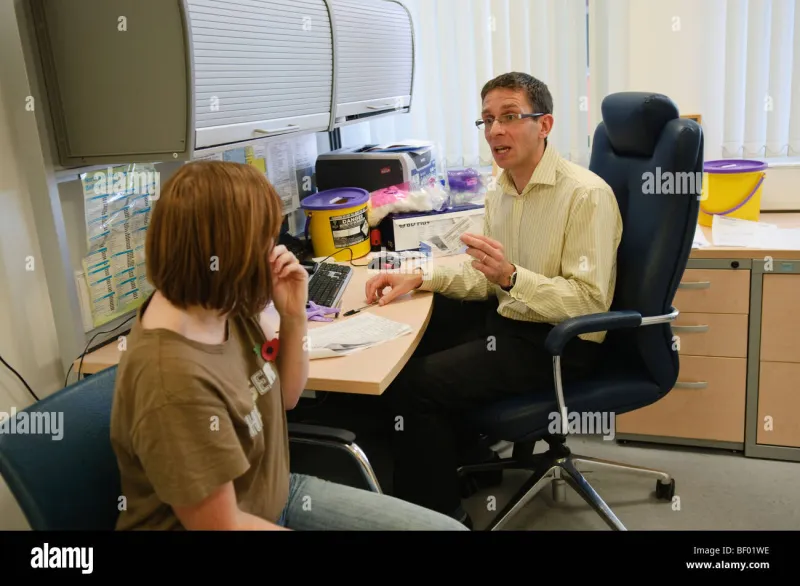
The Quiet Clash: When a Parent Doesn't Believe You're Depressed

Photo: Sok bopha, CC BY-SA 3.0, via Wikimedia Commons
Telling a parent you think you're depressed takes courage most adults would struggle with. So when the response is 'what have you got to be depressed about? You've got a roof over your head' — something inside you quietly closes. The conversation's over before it started, and now you've got two problems instead of one: the depression, and the fact that the person who's supposed to be in your corner doesn't seem to believe you.
If that's where you are right now, this is for you.
First, Understand What Actually Happened
'You're just a teenager' usually isn't cruelty. It's a defence mechanism, and understanding that — while it doesn't make it okay — helps you work out what to do next.
Some parents genuinely can't picture their child being depressed, because in their head depression looks like a news story, not their kid. Some come from generations or cultures where mental health wasn't discussed at all, and 'pull yourself together' was the only model they were ever given. Some are frightened — and fear comes out as dismissal. And some are struggling with their own low mood and can't face the mirror your honesty holds up.
None of that means you were wrong to speak up. It means the person you told wasn't equipped to hear it. Those are different problems with different solutions.
Stop Trying to Win the Argument at Home
A common trap: getting stuck in a loop of trying to convince your parents, again and again, that you're really unwell. Each conversation ends in a row, you feel more disbelieved than before, and nothing changes.
You can't force someone to understand depression from a debating position. What often works better is evidence over argument — and that means bringing in a professional who they're more likely to take seriously. Which is unfair, but it's the reality many teens in the UK face.
Your Routes to Support That Don't Need Parental Sign-Off
Here's the part a lot of young people don't know: you have options your parents don't control.
Your GP, on your own. In the UK, you can see a GP confidentially from age 16 without parental involvement, and younger teens can often be seen alone too, depending on their understanding. You can book the appointment yourself or ask a school nurse to help. Your first appointment about depression is less scary than you'd think — and a GP documenting your symptoms is exactly the kind of external voice that can shift a parent's view later.
Your school. Pastoral leads, heads of year and school counsellors exist precisely for this. A good head of year can also do something you can't: talk to your parents in a way that lands. Sometimes a teenager gets dismissed at home, then a teacher says the same words in a parents' evening meeting and suddenly it's real. It's frustrating, but use it.
Free, confidential services. Kooth offers online counselling and peer support without needing a referral. Shout (text SHOUT to 85258) is there around the clock. YoungMinds has a parents' helpline too — sometimes the fastest route to a parent changing their mind is another adult gently educating them.
CAMHS referrals. A GP or school can refer you to Child and Adolescent Mental Health Services. Waiting lists vary a lot depending on where you live, which is genuinely frustrating — but getting on the list is a start, and crisis support exists in the meantime via 111 (press 2 for mental health) or Samaritans on 116 123.
If You Want to Keep Trying With Your Parents
Some parents do come round — often slowly. If you've got the energy for it, a few things tend to help:
- Write it down. A letter or note can bypass the heated-conversation dynamic entirely, and gives them time to process without an audience for their defensiveness.
- Describe, don't diagnose. 'I've stopped enjoying everything, I can't sleep, I feel nothing most days' is harder to argue with than 'I have clinical depression'.
- Ask them to come to one appointment. Not to agree with you — just to listen to a professional. Many sceptical parents shift after one honest conversation with a GP.
- Pick your moment. Not mid-row, not when they're stressed about work. Calm, private, low pressure.
And if they still don't come round? That's a grief, and it's allowed to hurt. But their disbelief is a fact about their understanding, not a verdict on your reality.
The Bottom Line
Being disbelieved by a parent is painful, but it is not a dead end. Your GP, your school, and a whole network of free UK services can hear you even when home can't. Validation doesn't have to come from the people you share a kitchen with — it just has to come. Start with one appointment, one teacher, one text. The people who can help are closer than you think.